ONNI LONDON+ · Guides
Why you sleep hot
Core body temperature has to fall by around a degree for sleep to begin and stay down for it to continue. That fall happens by shedding heat through the skin. Anything that stops heat leaving delays sleep at the start of the night and breaks it in the small hours.
A bed does not make heat. It decides where heat goes.
Roughly eighty per cent of the heat you shed at night leaves through the surfaces touching you. If those surfaces hold heat rather than move it, the warmth stays against your skin and your temperature does not fall on schedule.
Three things decide that. How much of you is in contact with the surface. Whether air can move through the layers. And whether the materials conduct heat away or store it.
Why deep contact feels hotter
A surface that lets you sink in wraps more of your body, which feels supportive but closes off the air around you. The more skin in contact, the less surface is left to release heat, and the warmer the pocket you are lying in becomes.
Viscoelastic foams soften as they warm, so the longer you lie still the further you sink, and the further you sink the less air reaches you. The effect compounds through the night, which is why overheating often arrives at three in the morning rather than at bedtime.
What actually moves heat
| Mechanism | How it works | What it needs |
|---|---|---|
| Airflow | Warm air carried away and replaced | Open space inside the mattress |
| Conduction | Heat drawn sideways into the material | A layer that conducts rather than insulates |
| Moisture transfer | Sweat moved off the skin to evaporate | A cover that wicks rather than holds |
A pocket spring system is mostly air. Each spring sits in its own fabric pocket with space around it, and every movement on the surface pushes air through that space. That is the largest single reason a sprung bed runs cooler than a solid one: there is somewhere for warm air to go.
Night sweats are a different problem
Heat and moisture are not the same thing. A surface can be cool to the touch and still leave you damp, because the sweat has nowhere to evaporate. If you wake damp rather than hot, the cover and the bedding matter more than the mattress underneath. Look for materials that move moisture rather than absorb it, and check what your duvet and sheets are doing before you change the bed.
What helps, in order
- Room temperature between sixteen and nineteen degrees. This is the single largest lever, and it costs nothing to change.
- Bedding that breathes. A high tog duvet will defeat any mattress.
- A surface that lets air move rather than one that closes around you.
- A cover that carries moisture away from the skin.
How the Perennial handles it
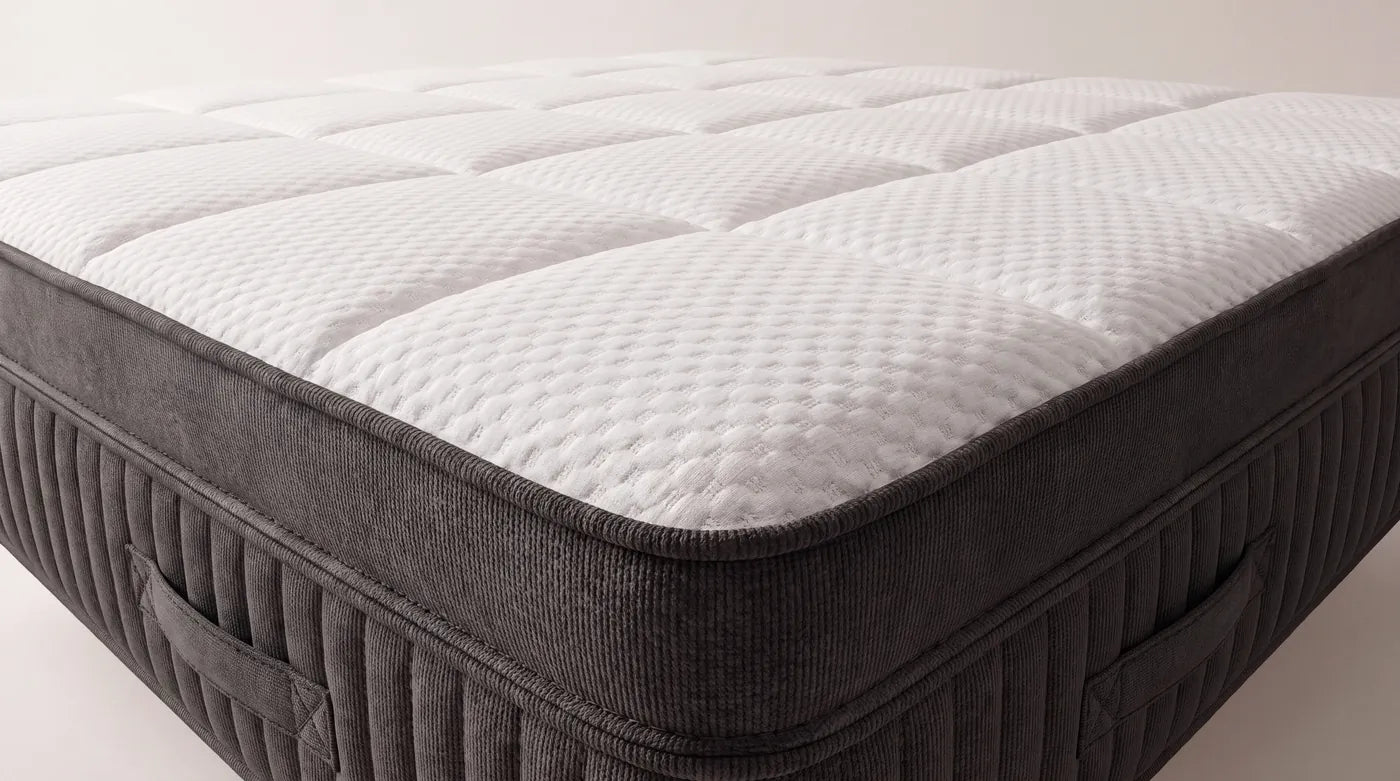
is twenty centimetres of individually pocketed springs, so the body of the mattress is open and air moves through it. sits in the comfort layer and draws heat sideways instead of holding it. carries moisture off the skin.
Three mechanisms, one for each of the ways a bed can hold onto heat.
What moves the heat, and where it goes.